Well, I'm debuting something new today: a weekly podcast! Each week, I'll post a podcast with a different forgotten, funny, or unusual word.
I recorded this and was all excited to launch it on Monday...when I realized I'd be in Mexico, visiting my dad. So, here you go - the inaugural Word-Hoard podcast, three days early. Woohoo!
Anyway, I invite you to listen in (click on the link below) and leave me a comment with your creative use of each week's word-hoard featured word!
This week's word-hoard feature: pitchkettled.
You can subscribe to this podcast (and this whole blog for that matter) by clicking the nifty RSS icon thingie in the right-sidebar.
If you'd like to subscribe to the podcast via iTunes, choose the Advanced menu, and then Subscribe to Podcast. This will bring up a dialog box, where you can paste this URL: http://feeds.feedburner.com/blogspot/YULh. I'm new at this, so if that doesn't work (it did for me, but you never know...) please let me know.
Friday, August 31, 2007


Thursday, August 30, 2007
I'm looking at my conference and vacation plans for next year. Looks like San Francisco Writer's Conference in February, Wiscon in May, vacation to Norway in June, and *maybe* World Fantasy in October. I would LOVE to go to the Historical Novel Society event in York (UK), but that's not in the cards. Sigh.
Got my copy of the Historical Novels Review, the 10th anniversary issue, and it is jam-packed with Historical Fiction goodness. Between the recommendations of the editors, and the reviews in this issue, I've added 5 more books to my to-be-read list...I think that brings it up to over 30 on the active list. Problem is, I can't seem to stop re-reading my Patrick O'Brian. Halfway through Post Captain again, and I love it as much as I did the first four times. Sigh.
Got my copy of the Historical Novels Review, the 10th anniversary issue, and it is jam-packed with Historical Fiction goodness. Between the recommendations of the editors, and the reviews in this issue, I've added 5 more books to my to-be-read list...I think that brings it up to over 30 on the active list. Problem is, I can't seem to stop re-reading my Patrick O'Brian. Halfway through Post Captain again, and I love it as much as I did the first four times. Sigh.
Wednesday, August 29, 2007
Myths, Symbols & Folklore
Thanatos: Ancient Greek personification of death; described as the twin brother of Hypnos (Latin Somnus), the dream, and the son of Nyx, the night. In European art and literature Thanatos is portrayed as a serious, winged youth with an extinguished or flickering torch in his hand. In the ancient world he was a negative figure, and even the gods hated him. He was said to accompany the souls of the dead to the underworld, except in those myths in which this was the duty of the furies. In one of the plays of Euripides (ca. 480-406 B.C.), Thanatos attempts to take the soul of Alcestis (who gave up her life to save her husband Admetus) from her grave and transport it to Hades, but Heracles overpowers Thanatos and restores Alcestis to the world of the living (operas by Lully and Gluck; oratorio by Handel). (Biedermann)
Thanatos: Ancient Greek personification of death; described as the twin brother of Hypnos (Latin Somnus), the dream, and the son of Nyx, the night. In European art and literature Thanatos is portrayed as a serious, winged youth with an extinguished or flickering torch in his hand. In the ancient world he was a negative figure, and even the gods hated him. He was said to accompany the souls of the dead to the underworld, except in those myths in which this was the duty of the furies. In one of the plays of Euripides (ca. 480-406 B.C.), Thanatos attempts to take the soul of Alcestis (who gave up her life to save her husband Admetus) from her grave and transport it to Hades, but Heracles overpowers Thanatos and restores Alcestis to the world of the living (operas by Lully and Gluck; oratorio by Handel). (Biedermann)

Tuesday, August 28, 2007
Working away at my Oleanna novel, and it's going very well, despite the fact that I really only get about 90 minutes every morning before I go to work to write during the week. I think I might actually be able to get the first draft done before NaNo starts in November, hurrah! I spent last week working on a burial scene, and bopping into our bedroom every 10 minutes or so to ask Craig about the state of dead bodies after a drowning. It's a good thing he loves me. :) It also doesn't put me in a great mood to go to work, but there you are.
Monday, August 27, 2007
The week of flower symbolism is now over...hope it was interesting and useful! As you can tell, I'm absolutely fascinated by the meaning ascribed to a simple flower - the whole vocabulary was so complex. Do we do the same thing with other objects in the 21st century? What do you think?
Listening to: "Kinderley" by Mediaeval Baebes
Listening to: "Kinderley" by Mediaeval Baebes
Sunday, August 26, 2007
Myths, symbols & folklore
The language of flowers, part seven:
"Especially in the early 19th century, it was not unusual to express difficult messages by means of flower arrangements. A playful flower-symbology had first emerged toward the end of the 18th century, and it was revived a century later. In 1899 G.W. Gessmann wrote that he hoped his guide to this Blumensprache would 'remind especially our gracious ladies of this most sensible custom.' "
Sorrel blossom: "I do not like knowing that you are always following me"
Spurge: "Your nature is so cold that one might think your heart is made of stone"
Sunflower: "It turns ever toward the sun. As sunlight is to it, so is your love to my life."
Thistles: "The poetry of life sweeps over you, leaving no trace"
Thyme: "Unity of souls is the greatest good"
Tulip: "You silent thing of splendor! Where is your inner value?"
Turk's cap: "Will your stirring, roguish glances do much more mischief?"
Vetch flowers: "To be envied are all to whom heaven gives the pearl 'loving friendship'"
Vine leaves: "With your recurring merriment you can restore my high spirits"
Weeping willow: "My heart trembles with the memory of your vanished presence"
Willow: "True friendship presents its arm to us, that we might take it as we walk and bear life's burden"
Yarrow: "Are you in fact as unaware as you would seem?"
(Biedermann)
The language of flowers, part seven:
"Especially in the early 19th century, it was not unusual to express difficult messages by means of flower arrangements. A playful flower-symbology had first emerged toward the end of the 18th century, and it was revived a century later. In 1899 G.W. Gessmann wrote that he hoped his guide to this Blumensprache would 'remind especially our gracious ladies of this most sensible custom.' "
Sorrel blossom: "I do not like knowing that you are always following me"
Spurge: "Your nature is so cold that one might think your heart is made of stone"
Sunflower: "It turns ever toward the sun. As sunlight is to it, so is your love to my life."
Thistles: "The poetry of life sweeps over you, leaving no trace"
Thyme: "Unity of souls is the greatest good"
Tulip: "You silent thing of splendor! Where is your inner value?"

Turk's cap: "Will your stirring, roguish glances do much more mischief?"
Vetch flowers: "To be envied are all to whom heaven gives the pearl 'loving friendship'"
Vine leaves: "With your recurring merriment you can restore my high spirits"
Weeping willow: "My heart trembles with the memory of your vanished presence"
Willow: "True friendship presents its arm to us, that we might take it as we walk and bear life's burden"
Yarrow: "Are you in fact as unaware as you would seem?"
(Biedermann)
Saturday, August 25, 2007
Myths, symbols & folklore
The language of flowers, part six:
Poppy: "Your sleepy, phlegmatic temperament will let no more meaningful emotions emerge from your heart."; also, "Why are you so tired?"
Rose (red): "This is the pledge of love and fidelity"; also, "As you are in bloom, let me rest on your bosom"
Rose (white): "Its pale petals signify to you the joy of love eternal and pure, for it lacks all earthly glow"
Rose (yellow): "The color of this flower reminds me of the jealous gaze of your eye"
Rose petal (red): "Yes!"
Rose petal (white): "No!"
Rosebud (with thorns: "Love, hopeful, with the doubts of uncertainty"
Rushes: "Add this basket to the one you have already received"
Snapdragon: "Your wanton mischief will be avenged upon you bitterly"
Snowdrop: "Be glad of the present and future, and grant the memory of a melancholy past no place in your heart"; also, "Purity of heart shines forth in your gaze"
The language of flowers, part six:
Poppy: "Your sleepy, phlegmatic temperament will let no more meaningful emotions emerge from your heart."; also, "Why are you so tired?"
Rose (red): "This is the pledge of love and fidelity"; also, "As you are in bloom, let me rest on your bosom"
Rose (white): "Its pale petals signify to you the joy of love eternal and pure, for it lacks all earthly glow"
Rose (yellow): "The color of this flower reminds me of the jealous gaze of your eye"
Rose petal (red): "Yes!"
Rose petal (white): "No!"
Rosebud (with thorns: "Love, hopeful, with the doubts of uncertainty"
Rushes: "Add this basket to the one you have already received"
Snapdragon: "Your wanton mischief will be avenged upon you bitterly"
Snowdrop: "Be glad of the present and future, and grant the memory of a melancholy past no place in your heart"; also, "Purity of heart shines forth in your gaze"
Friday, August 24, 2007
Myths, symbols & folklore
The language of flowers, part five:
Mullein (yellow): "Take courage. Fortune yet will bloom for you"
Myrtle-shoot: "It is ever green, for the wreaths that true love weaves never wilt"
Narcissus (yellow): Your being, flirtatious, enraptured, is like thi beautiful flower, which arises proudly, only to sink its head in yearning"; also, "Frightful! Would you destroy me completely?"
Nasturtium: "How shall I suffer, when the prospect of seeing you no longer fills my spirit with joyful hope!"
Oak leaves: "The crown of morality and virtue"
Oleander: "In you jealousy and pomp reign, for nature gave you not a warm feeling heart but only outer beauty"
Onion flower: "You an win my love if you show me the tender respect that a gentleman must feel for a feminine creature"
Passionflower: "Your bitter pain will be transfigured in the afterlife by the crown of eternal bliss"
Peony: "Your pride is unbearable"
Peppermint: "Of false hearts, like yours, I can find a surfeit"; also, "Why make so much fuss over trifles?"
(Biedermann)
The language of flowers, part five:
Mullein (yellow): "Take courage. Fortune yet will bloom for you"
Myrtle-shoot: "It is ever green, for the wreaths that true love weaves never wilt"
Narcissus (yellow): Your being, flirtatious, enraptured, is like thi beautiful flower, which arises proudly, only to sink its head in yearning"; also, "Frightful! Would you destroy me completely?"
Nasturtium: "How shall I suffer, when the prospect of seeing you no longer fills my spirit with joyful hope!"
Oak leaves: "The crown of morality and virtue"
Oleander: "In you jealousy and pomp reign, for nature gave you not a warm feeling heart but only outer beauty"
Onion flower: "You an win my love if you show me the tender respect that a gentleman must feel for a feminine creature"
Passionflower: "Your bitter pain will be transfigured in the afterlife by the crown of eternal bliss"
Peony: "Your pride is unbearable"
Peppermint: "Of false hearts, like yours, I can find a surfeit"; also, "Why make so much fuss over trifles?"
(Biedermann)
Thursday, August 23, 2007
Myths, symbols & folklore
The language of flowers, part four:
Laurel leaf: "The victor's wreath befits you not, but the modest wreath of virtue"
Lavender: "The memory of you is my only quiet joy"; also, "Your speech is puzzling"
Lilac: "In your every look and word speaks the beauty of your soul."; also, "Let us hurry to the altar, before our youth has passed!"
Lily (white): "You are as innocent as this symbol of innocence"
Linden blossom: "Sensual love vanishes like the nigh-dew; love from the soul abides like the golden star of day"
Lupine: "In you I found heavenly charms and splendrous blossoms of the spirit combined with those of the heart"
Marigold: "As eternal as the golden ring of his flower, is the purity of my love"
Meadow saffron: "My heart is kindled by love for you, and I gladly follow the divine emotion"
Mignonette: "Like this flower, quietly fragrant, without the pomp of color, you have pleasing talents without outward show"
Mimosa: "The great and beautiful soul that you contain is grounded in your noble, serious pride"
(Biedermann)
The language of flowers, part four:
Laurel leaf: "The victor's wreath befits you not, but the modest wreath of virtue"

Lavender: "The memory of you is my only quiet joy"; also, "Your speech is puzzling"

Lilac: "In your every look and word speaks the beauty of your soul."; also, "Let us hurry to the altar, before our youth has passed!"

Lily (white): "You are as innocent as this symbol of innocence"
Linden blossom: "Sensual love vanishes like the nigh-dew; love from the soul abides like the golden star of day"
Lupine: "In you I found heavenly charms and splendrous blossoms of the spirit combined with those of the heart"
Marigold: "As eternal as the golden ring of his flower, is the purity of my love"
Meadow saffron: "My heart is kindled by love for you, and I gladly follow the divine emotion"
Mignonette: "Like this flower, quietly fragrant, without the pomp of color, you have pleasing talents without outward show"
Mimosa: "The great and beautiful soul that you contain is grounded in your noble, serious pride"
(Biedermann)
Wednesday, August 22, 2007
Myths, symbols & folklore
The language of flowers, part three:
"Especially in the early 19th century, it was not unusual to express difficult messages by means of flower arrangements. A playful flower-symbology had first emerged toward the end of the 18th century, and it was revived a century later. In 1899 G.W. Gessmann wrote that he hoped his guide to this Blumensprache would 'remind especially our gracious ladies of this most sensible custom.' "
Dead-nettle: "Your promises of love leave me cold; your promising and gallantry ring hollow"
Field clover: "Let me know when I can see you again"
Forest-rose: "One who is born for quiet happiness, finds contentment only in obscurity"
Forget-me-not: "Three words reveal he wish to meet again: Forget me not!"; also, "Give heed to what this little flower whispers"
Garlic-blossom: "What I feel for you is the utmost indifference"
Grain (ear of): "What you ask, only time can bestow."
Guelder-rose: "However unfeeling you pretend to be, Cupid's arrow one day yet will reach you."
Hazelnut blossom: "Fear not: innocent love is under God's protection"
Hyacinth (white): "My heart draws me to you, pale dreamer"
Iris: "You fill my heart with joyful hope, only then to plunge it into doubt"
Iris (blue): "Your feigned emotions scatter, and no trace of them remains
(Biedermann)
The language of flowers, part three:
"Especially in the early 19th century, it was not unusual to express difficult messages by means of flower arrangements. A playful flower-symbology had first emerged toward the end of the 18th century, and it was revived a century later. In 1899 G.W. Gessmann wrote that he hoped his guide to this Blumensprache would 'remind especially our gracious ladies of this most sensible custom.' "
Dead-nettle: "Your promises of love leave me cold; your promising and gallantry ring hollow"
Field clover: "Let me know when I can see you again"
Forest-rose: "One who is born for quiet happiness, finds contentment only in obscurity"
Forget-me-not: "Three words reveal he wish to meet again: Forget me not!"; also, "Give heed to what this little flower whispers"

Garlic-blossom: "What I feel for you is the utmost indifference"
Grain (ear of): "What you ask, only time can bestow."
Guelder-rose: "However unfeeling you pretend to be, Cupid's arrow one day yet will reach you."
Hazelnut blossom: "Fear not: innocent love is under God's protection"
Hyacinth (white): "My heart draws me to you, pale dreamer"

Iris: "You fill my heart with joyful hope, only then to plunge it into doubt"

Iris (blue): "Your feigned emotions scatter, and no trace of them remains

(Biedermann)
Tuesday, August 21, 2007
Myths, symbols & folklore
The language of flowers, part two: "Especially in the early 19th century, it was not unusual to express difficult messages by means of flower arrangements. A playful flower-symbology had first emerged toward the end of the 18th century, and it was revived a century later. In 1899 G.W. Gessmann wrote that he hoped his guide to this Blumensprache would 'remind especially our gracious ladies of this most sensible custom.' "
Centaury: "It is bitter like the truth once told, but just as healing"
Cherry blossom: "My blush at your arrival may reveal to you the quiet fondness that I have for you"
Chive blossom: "I shall follow your sincere good advice"
Clover (four-leaf): "Fortune smiles upon me only when I can share it with you"
Corncockle: "I live for you alone"
Cotton blossom: "The blossoms of our union are yet tender; thus do I tend them with careful love"
Cowslip: "The key to my heaven lies in your angelic heart"
Cuckoopint: "Though life assail you, despair not! The knowledge that you are good and pure will exalt you."
Cyclamen: "With purest inclination I respect you above all else."
Dahlia: My heart is eternally with you; the heart is a thing of the homeland, not of the body."
(Biedermann)
The language of flowers, part two: "Especially in the early 19th century, it was not unusual to express difficult messages by means of flower arrangements. A playful flower-symbology had first emerged toward the end of the 18th century, and it was revived a century later. In 1899 G.W. Gessmann wrote that he hoped his guide to this Blumensprache would 'remind especially our gracious ladies of this most sensible custom.' "
Centaury: "It is bitter like the truth once told, but just as healing"

Cherry blossom: "My blush at your arrival may reveal to you the quiet fondness that I have for you"

Chive blossom: "I shall follow your sincere good advice"

Clover (four-leaf): "Fortune smiles upon me only when I can share it with you"

Corncockle: "I live for you alone"

Cotton blossom: "The blossoms of our union are yet tender; thus do I tend them with careful love"

Cowslip: "The key to my heaven lies in your angelic heart"

Cuckoopint: "Though life assail you, despair not! The knowledge that you are good and pure will exalt you."
Cyclamen: "With purest inclination I respect you above all else."

Dahlia: My heart is eternally with you; the heart is a thing of the homeland, not of the body."

(Biedermann)
Monday, August 20, 2007
Myths, symbols & folklore
The language of flowers, part one: "Especially in the early 19th century, it was not unusual to express difficult messages by means of flower arrangements. A playful flower-symbology had first emerged toward the end of the 18th century, and it was revived a century later. In 1899 G.W. Gessmann wrote that he hoped his guide to this Blumensprache would 'remind especially our gracious ladies of this most sensible custom.' "
acacia (white): "Your good heart assures me that our friendship will last."
Agave: "I remain favorably disposed to you despite your knavery."
Amaryllis (red): "I respect you from the depths of my soul."
Apple blossom: "Will the glow of love finally redden your delicate cheeks?"
Asphodel: "I expect letters numerous and heartfelt."
Aster (white): "Your true friendship lessens the torment of my misfortune."
Bindweed: "No gaze in the world is so keen, so deep, as the hawk's eye of love."
Bur: "Be assured of my sympathetic attachment and sincerest wish to be of aid."
Carnation (red): "You will be able to resist no longer, once you see the extent of my esteem and love."; also, "My bosom thrills in the rapture of longing"
Carnation (white): "You are the symbol of the closest friendship, for your color remains unchanged until death strips away your petals."
(Biedermann)
The language of flowers, part one: "Especially in the early 19th century, it was not unusual to express difficult messages by means of flower arrangements. A playful flower-symbology had first emerged toward the end of the 18th century, and it was revived a century later. In 1899 G.W. Gessmann wrote that he hoped his guide to this Blumensprache would 'remind especially our gracious ladies of this most sensible custom.' "
acacia (white): "Your good heart assures me that our friendship will last."
Agave: "I remain favorably disposed to you despite your knavery."
Amaryllis (red): "I respect you from the depths of my soul."

Apple blossom: "Will the glow of love finally redden your delicate cheeks?"

Asphodel: "I expect letters numerous and heartfelt."

Aster (white): "Your true friendship lessens the torment of my misfortune."

Bindweed: "No gaze in the world is so keen, so deep, as the hawk's eye of love."

Bur: "Be assured of my sympathetic attachment and sincerest wish to be of aid."
Carnation (red): "You will be able to resist no longer, once you see the extent of my esteem and love."; also, "My bosom thrills in the rapture of longing"

Carnation (white): "You are the symbol of the closest friendship, for your color remains unchanged until death strips away your petals."

(Biedermann)
Friday, August 17, 2007
Hurray!
My short story, "Stone Windows" has been published in issue #6 of Behind the Wainscot, the short fiction companion site to Farrago's Wainscot. Check it out!
Myths, symbols & folklore
Onion: A vegetable already popular in the time of the ancient Egyptians, frequently mentioned in ancient Greek writings (Homer, Aristophanes) as well. In time the onion and its cousins (leek, garlic, chive, shallot), because of their powerful odors, came to be thought of as food for the masses and rejected by the gentry – although in more recent centuries precisely these odors (and especially that of garlic) were believed to ward off vampires. In folk medicine the onion was recommended against congestion, impotence, dropsy, digestive disorders, colds, scurvy, and hair loss. (Biedermann)
Onion: A vegetable already popular in the time of the ancient Egyptians, frequently mentioned in ancient Greek writings (Homer, Aristophanes) as well. In time the onion and its cousins (leek, garlic, chive, shallot), because of their powerful odors, came to be thought of as food for the masses and rejected by the gentry – although in more recent centuries precisely these odors (and especially that of garlic) were believed to ward off vampires. In folk medicine the onion was recommended against congestion, impotence, dropsy, digestive disorders, colds, scurvy, and hair loss. (Biedermann)
Thursday, August 16, 2007
Wednesday, August 15, 2007
Myths, symbols & folklore
quintessence: A concept imported into everyday usage from the world of alchemy where it was believed that the four elements of ancient cosmology (earth, sky, fire, and water) were complimented by a "fifth essence": the pure, ethereal world-spirit. The alchemist's spiritual focus on essence, rather than matter, was supposed to increase the proportion of the fifth essence in the make-up of the entire world. The quintessence was thought to be present within each of the other four elements as its sublime creature: in water as the dolphin, in fire as the phoenix, in the air as the eagle, and on earth as the human race. At the same time, the quintessence was believed to envelop and extend beyond each of the others. The graphic symbol corresponding to the quintessence is the pentacle. (Biedermann)
Also, was feeling low last night, so picked up one of my Billy Collins collections and found this fantastic poem again.
Metamorphosis
If Kafka could turn a man into an insect in one sentence
perhaps he could transform me into something new,
a slow willful river running through a forest,
or simply the German word for river, a handful of letters
hidden in the dark alphabetical order of a dictionary.
Not that I am so miserable, but i could use a change
of scenery and substance, plus the weather reminds me of him.
I imagine Kafka at his desk: the nib of his pen,
like the beak of a bird, disturbs the surface of a pool of ink,
and he writes a sentence at the top of a page
changing me into a goldfish or a lost mitten
or a cord of split wood or the New York Public Library.
Ah, to awaken one morning as the New York Public Library.
I would pass the days observing old men in raincoats
as they mounted the ponderous steps between the lions
carrying wild and scribbled notes inside their pockets.
I would feel the pages of books turning inside me like butterflies.
I would stare over Fifth Avenue with a perfectly straight face.
(Billy Collins)
quintessence: A concept imported into everyday usage from the world of alchemy where it was believed that the four elements of ancient cosmology (earth, sky, fire, and water) were complimented by a "fifth essence": the pure, ethereal world-spirit. The alchemist's spiritual focus on essence, rather than matter, was supposed to increase the proportion of the fifth essence in the make-up of the entire world. The quintessence was thought to be present within each of the other four elements as its sublime creature: in water as the dolphin, in fire as the phoenix, in the air as the eagle, and on earth as the human race. At the same time, the quintessence was believed to envelop and extend beyond each of the others. The graphic symbol corresponding to the quintessence is the pentacle. (Biedermann)
Also, was feeling low last night, so picked up one of my Billy Collins collections and found this fantastic poem again.
Metamorphosis
If Kafka could turn a man into an insect in one sentence
perhaps he could transform me into something new,
a slow willful river running through a forest,
or simply the German word for river, a handful of letters
hidden in the dark alphabetical order of a dictionary.
Not that I am so miserable, but i could use a change
of scenery and substance, plus the weather reminds me of him.
I imagine Kafka at his desk: the nib of his pen,
like the beak of a bird, disturbs the surface of a pool of ink,
and he writes a sentence at the top of a page
changing me into a goldfish or a lost mitten
or a cord of split wood or the New York Public Library.
Ah, to awaken one morning as the New York Public Library.
I would pass the days observing old men in raincoats
as they mounted the ponderous steps between the lions
carrying wild and scribbled notes inside their pockets.
I would feel the pages of books turning inside me like butterflies.
I would stare over Fifth Avenue with a perfectly straight face.
(Billy Collins)
Tuesday, August 14, 2007
Monday, August 13, 2007
Myths, symbols & folklore
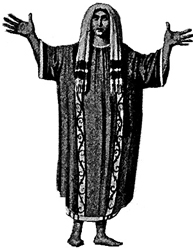
orant: a posture for prayer in which the hands are not folded but raised to the level of the shoulders or the head, the palms turned upward, as if to receive the bounties of heaven. This is said to be the oldest and most natural posture for prayer; it is still assumed by priests in the celebration of Mass. Orant prayer, common in Mediterranean regions, was taken over by the early Christian Church, where it was seen as appropriate for imploring divine blessing and assistance. Figures on tombstones often portray the deceased in this posture. In the Eastern Church the virgin Mary has often been portrayed orant, but in the West the posture has lost currency and significance." (Biedermann)
orant: a posture for prayer in which the hands are not folded but raised to the level of the shoulders or the head, the palms turned upward, as if to receive the bounties of heaven. This is said to be the oldest and most natural posture for prayer; it is still assumed by priests in the celebration of Mass. Orant prayer, common in Mediterranean regions, was taken over by the early Christian Church, where it was seen as appropriate for imploring divine blessing and assistance. Figures on tombstones often portray the deceased in this posture. In the Eastern Church the virgin Mary has often been portrayed orant, but in the West the posture has lost currency and significance." (Biedermann)
Friday, August 10, 2007
Myths, symbols & folklore
storm: "in the religious imagery of many peoples it is a symbol or a real expression of the acts of divine powers. Temporal turning points (e.g., new seasons, centuries, epochs) are often visualized as storms or natural catastrophes." (Herder)
Listening to: I Remember You by Chet Baker
storm: "in the religious imagery of many peoples it is a symbol or a real expression of the acts of divine powers. Temporal turning points (e.g., new seasons, centuries, epochs) are often visualized as storms or natural catastrophes." (Herder)
Listening to: I Remember You by Chet Baker
Thursday, August 09, 2007
Wednesday, August 08, 2007
Myths, symbols & folklore
anemone: "A short-lived flower (from Greek anemos, wind), it is a symbol in antiquity of the transitory. It is the flower of Adonis, whom Venus transformed into a reddish-purple anemone. In Christian symbolism, anemones (as well as roses and marguerites) signify the blood shed by the saints." (Herder)
anemone: "A short-lived flower (from Greek anemos, wind), it is a symbol in antiquity of the transitory. It is the flower of Adonis, whom Venus transformed into a reddish-purple anemone. In Christian symbolism, anemones (as well as roses and marguerites) signify the blood shed by the saints." (Herder)

Tuesday, August 07, 2007
Word-hoard
ure: "a dampish mist; an atmospheric haze, especially of a colored nature; Scotland. To pray [1200s]. To have good fortune [1400s]." (Sir James Murray's New English Dictionary, 1926)
Listening to: BBC Prom #32
ure: "a dampish mist; an atmospheric haze, especially of a colored nature; Scotland. To pray [1200s]. To have good fortune [1400s]." (Sir James Murray's New English Dictionary, 1926)
Listening to: BBC Prom #32
Monday, August 06, 2007
Word-hoard
Sublunary: beneath the moon, earthly
Listening to: Obscurity Knocks by Trashcan Sinatras
Spent the weekend with my friend over in Nevada - with a few stops, it took under 5 hours to get there. I frigging love living in the Bay Area.
Craig's the photographer in our family, but here are a couple of snaps that I took:

This is from Hwy 88, at about 7,000 feet. Way in the distance are the Big Valley (AKA San Joaquin) and the Diablo range.

This is, I believe, just past the 8,000 mark on Kit Carson Pass.
One of the things I love about the Sierra is that they're made of granitic batholith. Mostly because I like to say "batholith". Sounds like someone with a lisp is trying to say "basilisk".
Sublunary: beneath the moon, earthly
Listening to: Obscurity Knocks by Trashcan Sinatras
Spent the weekend with my friend over in Nevada - with a few stops, it took under 5 hours to get there. I frigging love living in the Bay Area.
Craig's the photographer in our family, but here are a couple of snaps that I took:
This is from Hwy 88, at about 7,000 feet. Way in the distance are the Big Valley (AKA San Joaquin) and the Diablo range.
This is, I believe, just past the 8,000 mark on Kit Carson Pass.
One of the things I love about the Sierra is that they're made of granitic batholith. Mostly because I like to say "batholith". Sounds like someone with a lisp is trying to say "basilisk".
Friday, August 03, 2007
Myths, symbols & folklore:
Crossroads: "In most cultures it is a significant place of meeting with transcendent powers (gods, spirits, the dead). It is often close to the symbolic content of the door, since the crossroads can also symbolize the necessary transition to the new (from one phase of life to another; from life to death). To win the favor of the gods or the spirits, obelisks, altars, or stones were erected, or inscriptions were placed at crossroads. Practically everywhere in Europe crossroads were also regarded as the meeting places of witches and evil demons. For this reason, Christians have erected at crossroads crosses, chapels, and statues of the Madonna and the stains. Among many African tribes the symbolism of the crossroads plays a significant role in ritual acts. In Greek mythology Oedipus slays his father at a crossroads. The Greeks made sacrifices to the goddess of the (three-way) fork in the road who was often represented in triple form: Hecate, goddess of ghosts and magic, who was also closely associated with the realm of the dead. The statue of Hermes, the psychopomp (spirit guide), stood guard at crossroads and forks in the road...The Romans knew a cult of the Lares of the crossroads, the aim of which was to make fate propitious. Under late Germanic law, legal proceedings were undertaken at the crossroads." (Herder)
Listening to: Passing Thus Alone by the Mediaeval Baebes
Crossroads: "In most cultures it is a significant place of meeting with transcendent powers (gods, spirits, the dead). It is often close to the symbolic content of the door, since the crossroads can also symbolize the necessary transition to the new (from one phase of life to another; from life to death). To win the favor of the gods or the spirits, obelisks, altars, or stones were erected, or inscriptions were placed at crossroads. Practically everywhere in Europe crossroads were also regarded as the meeting places of witches and evil demons. For this reason, Christians have erected at crossroads crosses, chapels, and statues of the Madonna and the stains. Among many African tribes the symbolism of the crossroads plays a significant role in ritual acts. In Greek mythology Oedipus slays his father at a crossroads. The Greeks made sacrifices to the goddess of the (three-way) fork in the road who was often represented in triple form: Hecate, goddess of ghosts and magic, who was also closely associated with the realm of the dead. The statue of Hermes, the psychopomp (spirit guide), stood guard at crossroads and forks in the road...The Romans knew a cult of the Lares of the crossroads, the aim of which was to make fate propitious. Under late Germanic law, legal proceedings were undertaken at the crossroads." (Herder)
Listening to: Passing Thus Alone by the Mediaeval Baebes
Thursday, August 02, 2007
Wednesday, August 01, 2007
Myths, symbols & folklore
Cat: "It is an ambivalent symbolic animal. In Japan, seeing a cat is a bad omen. In the Cabala and in Buddhism, the cat is closely associated with the symbolism of the serpent. In Egypt, the domestic, agile, and useful cat was honored as a sacred animal of the goddess Bastet, the protectress of home, mothers, and children. In the Middle Ages cats were thought to be witches' animals, and black cats were seen as signs of the devil; according to superstition, the black cat brings misfortune. The cat is the fourth sign of the Chinese zodiac, corresponding to Cancer." (Herder)
Cat: "It is an ambivalent symbolic animal. In Japan, seeing a cat is a bad omen. In the Cabala and in Buddhism, the cat is closely associated with the symbolism of the serpent. In Egypt, the domestic, agile, and useful cat was honored as a sacred animal of the goddess Bastet, the protectress of home, mothers, and children. In the Middle Ages cats were thought to be witches' animals, and black cats were seen as signs of the devil; according to superstition, the black cat brings misfortune. The cat is the fourth sign of the Chinese zodiac, corresponding to Cancer." (Herder)
Subscribe to:
Posts (Atom)